
Bihar · Jharkhand · Season I 2026–27
Build a satellite. Drop it from 120 m. Make it talk on the way down.
The first school-level CanSat competition for Bihar and Jharkhand. Teams of Class 8 to 12 students design and build a working satellite the size of a soft-drink can. A G-Vayu drone releases it mid-air; it has to open its parachute, stream live data to a ground station the team built, and land in one piece.
- Registration closes
- 25 Oct 2026registration open
- Grand Finale
- 11 Jan 2027Patna · reserve day 12 Jan
- Open to
- Class 8 to 12Junior and Senior, judged apart
- Entry per team
- From ₹2,000Pay online after registering
Sample packet. Teams build this ground station themselves: it plots live and saves every packet.
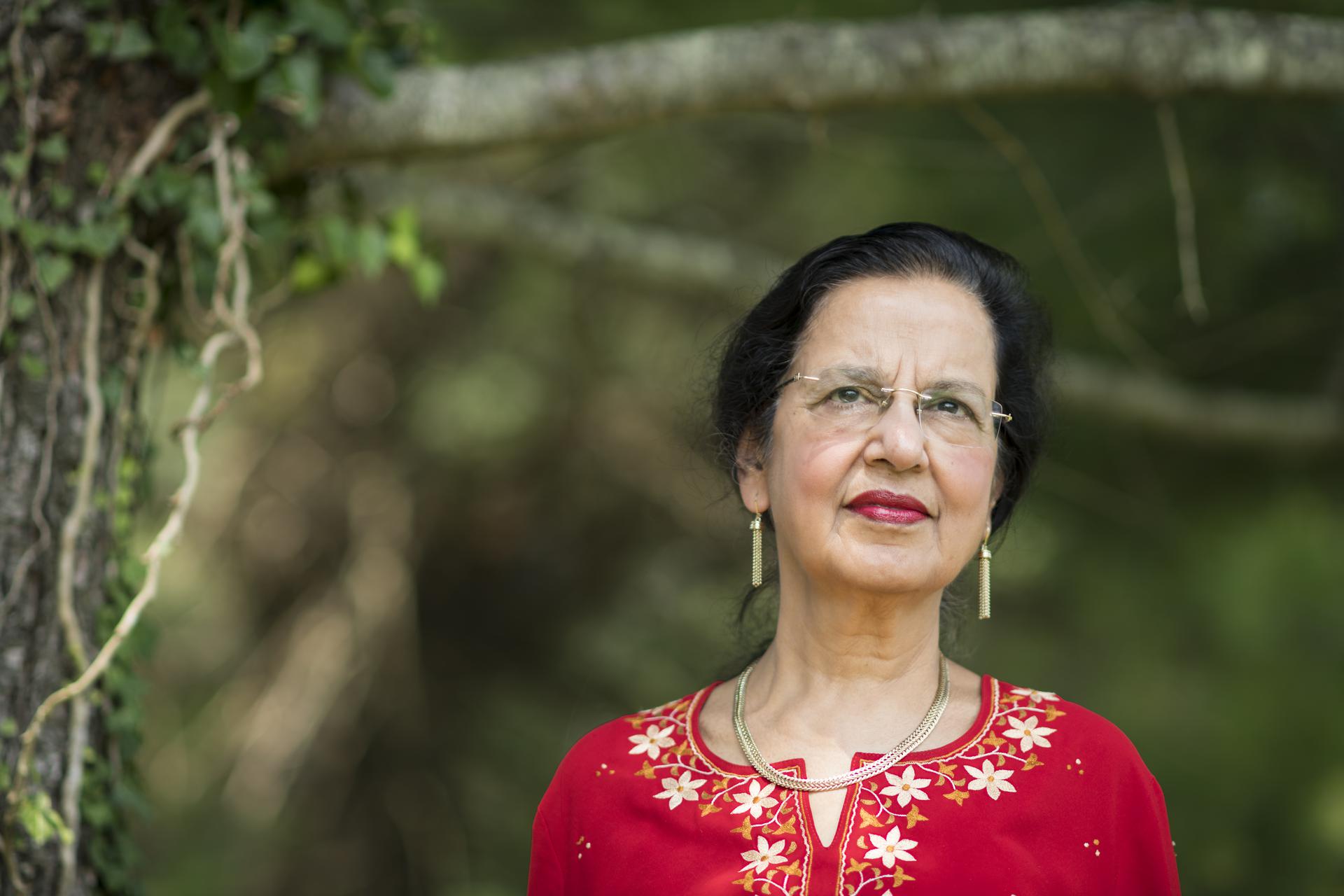
Dr. Hashima Hasan
Deputy Program Scientist, James Webb Space Telescope, NASA
Program Scientist for NuSTAR, IXPE and the Keck Observatory. D.Phil. in Theoretical Nuclear Physics, University of Oxford.
Mentoring school teams from Class 8 to 12 as they design, build and fly their own CanSats.
- In partnership with
-


- Mentor · Guest of Honour, Grand Finale
-
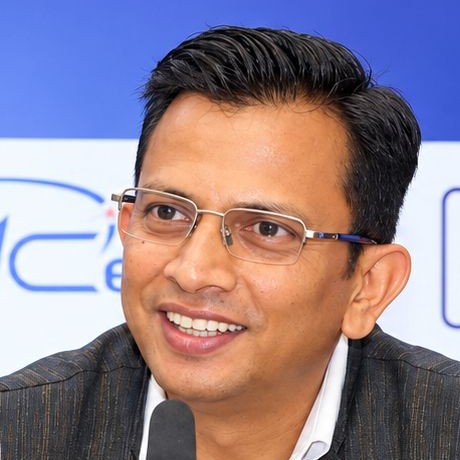 Prof. Vinay KumarProfessor and Head, Physics and Astronomical Sciences, Central University of Jammu. Former Convener, Satish Dhawan Centre for Space Science.
- Organised by
- AirLeap, a G-Vayu Robotics initiative
ISO 9001:2015. G-Vayu builds its own UAVs, ESCs and robotic systems. - Title sponsor
- Open for Season I · Talk to us
What every CanSat has to do
A satellite the size of a soft-drink can, 300 to 500 grams, built from parts the team picks and pays for with sponsor money. No pre-made kits. At the offline rounds a G-Vayu drone carries it up and lets go.
- Know where it is in the flightDetect and report its state: on the pad, released, descending, landed.
- Come down safelyOpen a parachute and descend at 5 to 8 metres a second.
- Talk on the way downSend live telemetry once a second: altitude, pressure, temperature, battery voltage, acceleration and flight state.
- Remember everythingKeep an onboard backup log in case the radio drops packets.
- Be foundSound a buzzer after landing so the team can recover it.
- Report to a station the team builtThe ground station plots data live and saves every packet it receives.
Two categories, judged separately
Want the full rulebook and technical brief? Ask us for a copy.
| Per team | JuniorClass 8 to 10 | SeniorClass 11 to 12 |
|---|---|---|
| Release height | 60–80 m | 120 m |
| Max packed size | 75 mm dia × 145 mm | 66 mm dia × 115 mm |
| Mass | 300–500 g | 300–350 g |
| Secondary mission | Optional, earns bonus points | One required: air-quality profile, two-stage descent, onboard video, GPS landing prediction, or light and UV profile |
| Hardware budget cap | ₹15,000 | ₹25,000 |
| Entry fee | ₹3,500 | ₹5,000 |
| Government school | ₹2,000 | ₹2,500 |
| All-girls team | ₹2,000 | ₹2,000 |
| Independent team | ₹5,000 | ₹5,000 |
Concessions don't stack: a school team pays the single lowest rate it qualifies for. Independent teams, entering outside a school, pay a flat ₹5,000. Fees are paid online after you register.
- Both: descent
- 5–8 m/s under parachute
- Both: radio
- LoRa 865–867 MHz or 2.4 GHz, 100 mW max
- Both: power
- One protected Li-ion cell or AA cells, 60 minutes runtime
- Not allowed
- Pyrotechnics, compressed gas, unprotected LiPo cells, pre-made kits
Two online reviews and a video test narrow the field. Two drone rounds decide it.
Junior and Senior run as separate tracks through every stage, across 62 districts and 14 divisions.
- 25 OctRegistration closesOpen now
School details and the category of each team, then the entry fee online.
- By 5 NovPreliminary Design ReviewOnline · rolling
Due 14 days after you register. Written feedback within 4 days. Only hard rule breaks are cut.
- 18 NovCritical Design ReviewOnline
Design document and a 5-minute video of live telemetry. Results 21 Nov: top 2 per district go on.
- 5–8 DecDistrict Deploy TestOnline · video
A standard test filmed at school: flight states, radio range and a supervised parachute drop. No drones. One champion per district.
- 19–21 DecDivision Readiness TestOffline
The first full-height drone release, plus inspection. One champion per division.
- 11 Jan 2027Grand Finale, PatnaOffline
28 finalists, 14 per category, in one day. Reserve day 12 Jan.
Students build it. Students never pay for it.
Component money comes from the school and from local businesses the team brings on board. Families pay nothing. The team represents its sponsors through the season and shows sponsor letters and receipts at design review.
- Team
- 5 or 6 students and one teacher mentor, who handles approvals, safety and the receipts
- Roles
- Team lead, electronics and power, flight software, structures and recovery, ground station, sponsorship. Senior teams also own a secondary mission.
- Girls
- At least 35%: 2 in a team of 5, 3 in a team of 6. Boys' schools can request special permission.
- Per school
- We recommend no more than 5 teams from one school
- Language
- Rules, briefs and reviews are in English
Hardware is capped at ₹15,000 for Junior and ₹25,000 for Senior teams, so a well-funded school can't simply outspend the rest.
Pre-made kits are not allowed, including AirLeap's own CanSat kit. Teams choose and buy their own parts.
Back a government school team from your district.
Pick a district and a category, then fund the team's entry fee, its components, or both. Component costs vary with each design, so we ask a flat ₹10,000 per team and send you a report of where your money was used. Pay online, and our payment team calls you within 12 hours to confirm your team.
- Entry fee
- ₹2,000 Junior · ₹2,500 Senior per team
- Components
- ₹10,000 per team, with a spending report
The finale is a starting line
- Top 10Teams trained for national and international satellite-building competitions
- Top 30Ongoing mentorship in space technology
- Top 50A drone-making workshop
- AllWritten feedback on every PDR and mentor office hours until the CDR. Teams that clear the CDR get an assigned mentor.
No rockets. No explosives.
- Every drone release is flown by a certified pilot, on insured G-Vayu drones, inside a 1,500 m exclusion zone.
- Students never fly drones or climb onto roofs for the video test.
- No pyrotechnics, compressed gas or unprotected LiPo cells on any CanSat.
Before you register
- AirLeap does not provide accommodation or transport for offline rounds.
- Diwali, Bhai Dooj and Chhath fall between the PDR and the CDR. Plan the build around them.
- Questions: office@air-leap.com or WhatsApp +91 96229 22603
Frequently asked
Who can take part?
How many teams can one school enter?
How do we pay the entry fee?
Can we use a ready-made CanSat kit?
Who pays for the components?
We're a government school with no budget. Can we still take part?
Where are the offline rounds?
Is it safe?
Last date 25 October 2026
One form per school, about two minutes. Pay the entry fee online on the next page.